Richness vs Responses: How To Get Detailed Survey Feedback Without Annoying Your Customers

If you’re responsible for customer experience, whether you run your own business or lead CX in a larger organisation, you already know the uncomfortable truth: you need customer feedback, but your customers don’t really want to give it to you.
At least, not if the process feels like work.
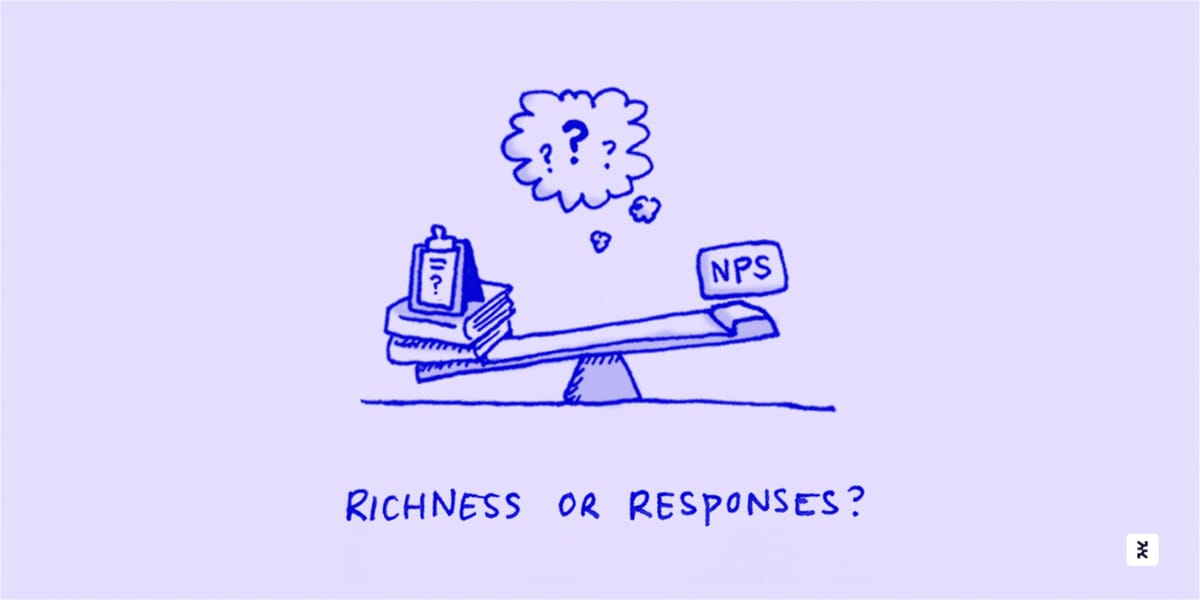
And that’s where the tension lies. On one hand, you want rich, detailed feedback...the kind you get from multi-step surveys that surface sentiment, friction points, and opportunities for improvement. On the other hand, customers increasingly prefer interactions that are quick, light-touch, and almost invisible. That’s why NPS surveys (simple “How likely are you to recommend us?” questions) tend to get significantly higher response rates.
So which do you choose? The survey that gets answered, or the survey that gives you actual insight?
Let’s break down the trade-offs and explore a smarter path forward.
The Problem with Long, Multi-Step Surveys
Detailed surveys promise better data. They let you dig deeper into drivers, behaviours, and context. They feel like the “responsible” choice for organisations committed to continuous improvement.
But there’s a catch:
1. Low Completion Rates
A long survey invitation has all the appeal of a “mandatory feedback session” on a Friday afternoon. Many customers simply abandon it.
2. Response Bias
The people most likely to complete long surveys tend to be outliers: very happy or very unhappy. That means your data may skew extreme.
3. Poor Timing Fit
Most customer experiences are short and snackable. Asking for a dissertation after a 30-second transaction feels disproportionate.
4. Friction → Drop-Off → Worse Data
The more friction you introduce, the more customers opt out, and the less reliable your insights become.
The Limitations of NPS and One-Click Ratings
On the other end of the spectrum, NPS (or a simple star/emoji rating) is almost always a win in terms of participation. People will tap a quick score. No hesitation.
But:
1. You Get the “What”, But Not the “Why”
NPS reveals sentiment, but not context.
A detractor gives you a “4”—but what went wrong?
A promoter gives you a “10”—but what exactly delighted them?
2. Not Actionable Alone
Scores are useful for benchmarking, but they don’t inherently tell you what to fix or optimise.
3. Teams Get Stuck Interpreting
Because there’s so little detail, teams often end up guessing at root causes—or making assumptions based on incomplete data.
**So What’s the Answer?
A Smarter, Dynamic Hybrid Approach**
You don’t need to choose between detail and participation. The modern answer is an intelligent, dynamic NPS widget—one that starts with a quick, effortless score but then adapts to each customer with fast, context-driven micro-questions.
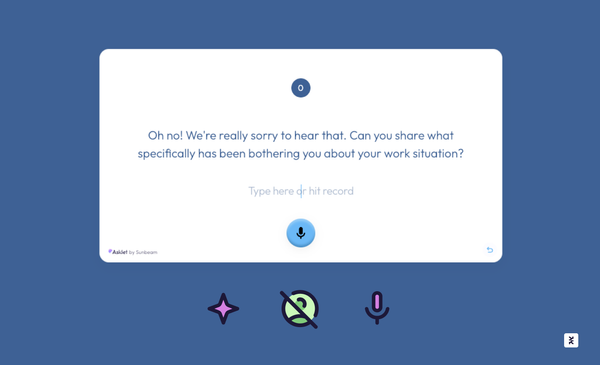
Asklet | An intelligent NPS widget that asks dynamic follow-up questions, and feels natural and frictionless to customers
This approach:
1. Gets the High Response Rates of NPS
The initial “How likely are you to recommend us?” prompt acts as a gateway. Low effort, low cognitive load, high completion.
2. Adds Follow-Up Questions Without Feeling Heavy
Once a customer submits their score, the widget shows 1–2 ultra-light follow-up questions tailored to the rating they gave.
- Promoter? “That's great to hear! What made your experience great today?”
- Passive? “Ok, that's fair enough. What could we improve?”
- Detractor? “Oh no, we're sorry. Tell us what happened, what went wrong?”
Each question feels like a continuation of the flow, not a new survey.
3. Feels Fun, Effortless, and Interactive
Modern micro-survey widgets are designed less like “forms” and more like conversation bubbles (without being a chatbot). They’re visual. They animate. They feel human.
4. Produces Rich, Usable, Actionable Customer Insight
You get:
- A reliable score
- A structured driver of that score
- Additional short-form context
- Higher completion rates than traditional surveys
- Better quality than NPS alone
It’s the best of both worlds.
Why This Works: The Psychology Behind It
Customers are far more willing to answer questions when:
- they’re asked one at a time
- questions feel personalised
- it doesn’t feel endless
- progress feels natural—not like a chore
- the interface is smooth and mobile-first
In other words: people don’t dislike giving feedback. They dislike friction.
A well-designed dynamic NPS widget removes that friction—and, in some cases, even makes the experience surprisingly enjoyable.
The Future of Customer Feedback Is Frictionless
As expectations for speed and simplicity continue rising, organisations need feedback mechanisms that respect customers’ time while still delivering the insight that teams need to improve.
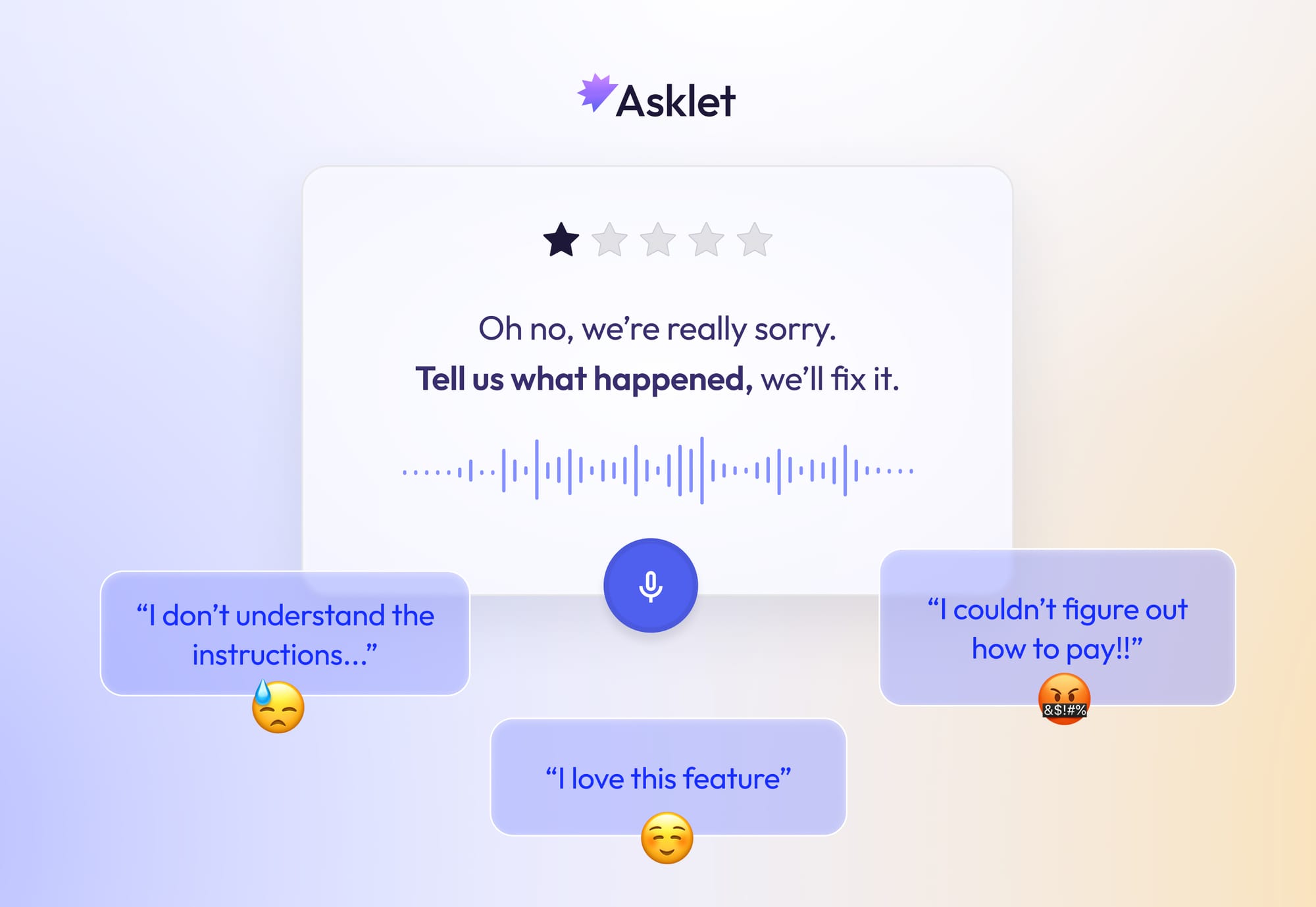
Asklet by Sunbeam | Intelligent NPS widgets
Asklet widgets ask quick, finely-tuned questions that get better feedback from your customers and users. Let users respond by voice or text, and get the rich detail you need to identify issues faster and easier.
A smart, dynamic NPS flow is the modern middle ground—a tool that:
- captures sentiment instantly
- follows up intelligently
- feels fresh, light, and conversational
- dramatically increases the quality and quantity of customer insight
If you’ve been stuck choosing between “lots of data nobody fills out” or “high response rate but missing context,” you no longer need to choose.
This is the new standard: effortless input for your customers, meaningful output for your business.
Are you someone who sends a lot of surveys? We need to talk to you! We're Sunbeam, and we're on a mission to build the future of feedback using new & emerging tech. Get in touch at [email protected], let's talk!